


Understanding Offset Printing
 |
The Basics |
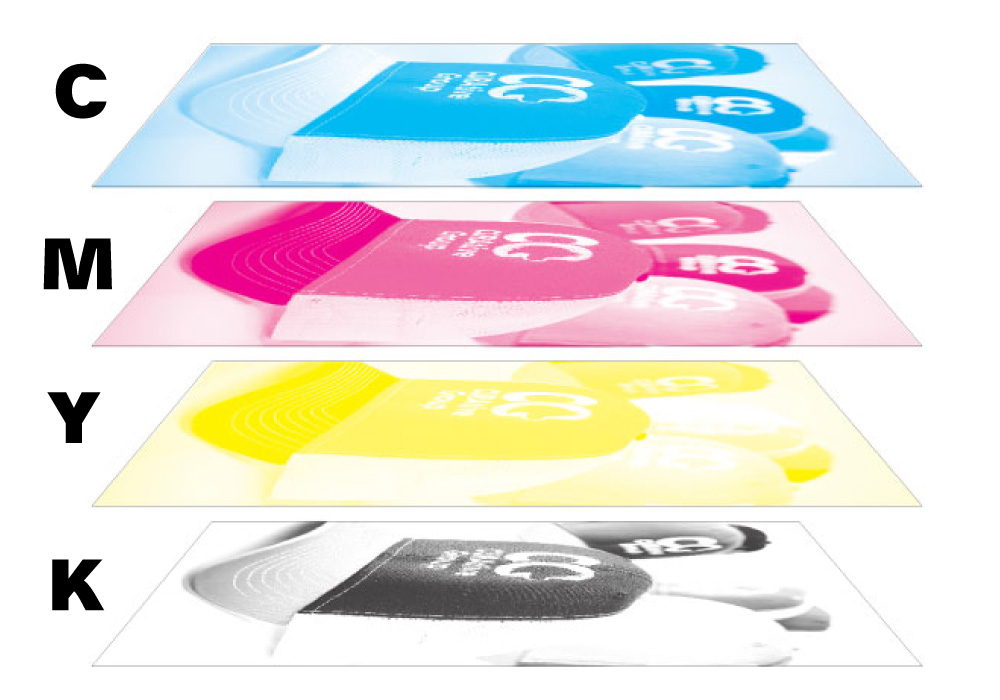
Art files are separated out by color CMYK (Cyan, Magenta, Yellow, Black), then each color is laser etched onto an aluminum plate. |
|
These plates are then dampened with a mixture of water and ink. Ink rollers transfer ink to the image areas of the plate, while a water roller applies water to the non-image areas. The inked image is transferred to a rubber cylinder, or "blanket". The inked image is transferred from the blanket onto the press sheet. Finally, sheet runs through transfer drums. Each drum has grippers that pull the sheet onto the next color station. |
 |
Quality Offset is notorious for producing sharp and precise details. Consistency From start to finish each run maintains uniformity. Versatility Offset is available for a variety of surfaces: paper, cardboard and even plastic. Cost A great cost-effective solution for large-scale production. Much of the cost associated with offset is the setup, so the higher the print quantity, the lower the price per piece. High End Specialty Great for embossing, foil stamping, metallic inks, UV coatings and your choice of gloss or matte finishes. Color Accuracy with Pantone Matching Utilize the Pantone Color Matching System (PMS) for exact color reproduction, spot colors and expert color management. |
|

 Annnnd... We're LIVE! Explore our new website